
The Wheel, the Sea, and the Journey
The Glass RoomThis flow traces recurring travel images as they connect desire, escape, exile, and the uncertain possibility of return.
increasing Bearing strength in each event
 decreasing
Bearing strength in each eventdecreasingThe Wheel of Desire
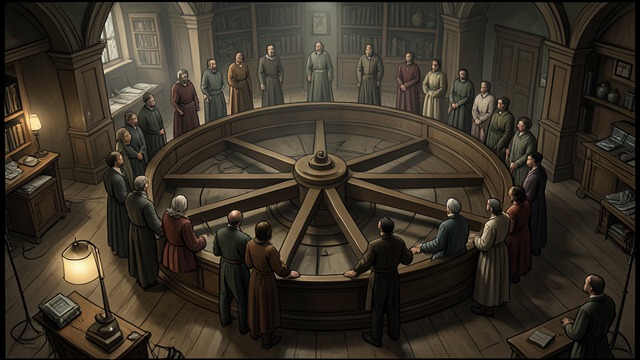
The Wiener Riesenrad
A repeated image
Viktor meets Kata near the great wheel in the Prater. The ride gives their encounter a sense of motion, vertigo, and chance.
Later, the wheel becomes a private symbol that brings Kata to mind whenever Viktor sees its arc above Vienna.
Fate and choice
The image can suggest an impersonal wheel of fate, but their relationship continues because they choose to meet again. The symbol holds both chance and responsibility.
The House as Ship
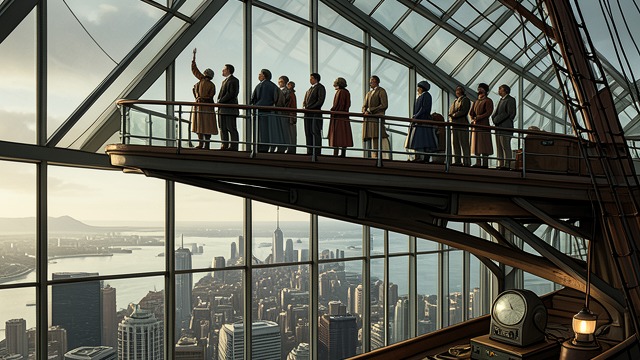
A Vessel Above the City
Shelter imagined as passage
Viktor imagines the Glass Room as the bridge of a ship, with the rooms above as cabins. The metaphor makes the house appear to travel through political danger even while it remains fixed on the hillside.
The image expresses his wish to navigate rather than simply endure events.
The storm ahead
The ship cannot protect the family from the approaching occupation. The metaphor makes their domestic security seem both carefully designed and radically vulnerable.
Flight Across Europe
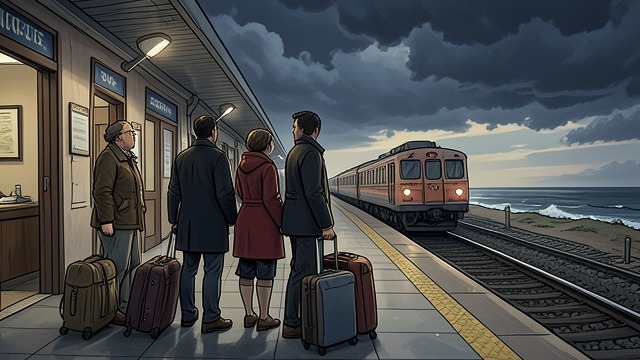
Movement Under Pressure
Escape as a route
The Landauers travel from Město toward Switzerland and later across France and Spain. Their route is shaped by visas, trains, changing borders, and the need to keep moving.
Every stop offers temporary safety rather than a settled home.
The ocean ahead
The journey toward Bilbao and a transatlantic ship takes the family farther from Europe. Travel becomes both an escape from danger and a painful departure from the world they know.
A New Ocean, a New Life
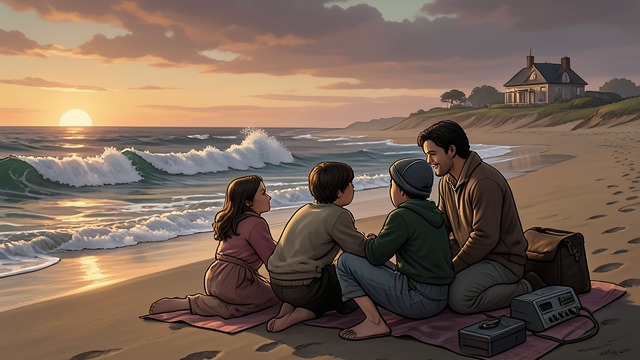
Exile Reorients the Family
The sea as daily sound
In the family’s tropical exile, the ocean becomes a constant presence. Liesel, who once knew it only as an imagined landscape, now hears it as the sound of displacement and possible passage.
The surrounding heat and unfamiliar setting deepen her sense that home has become remote.
A future overseas
Viktor imagines a new business and a new life in America. The family moves forward, but the ocean does not erase the memory of the house or the people left behind.
Return Across Time
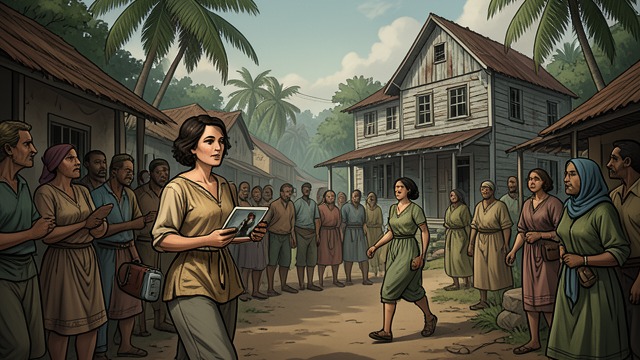
Journey Back to the House
A return becomes possible
Liesel travels back to Město after decades away, carrying memories that no geographical journey can fully reconcile with the present building.
Marie Delmas also arrives, prompted by a photograph and the return of childhood recollection.
Not the same destination
The journeys bring separated people into contact, but the house and the relationships it held have changed. Return can reconnect memory to place without reversing exile.
At Viktor and Kata’s first meeting
As the family debates leaving Město
From March 1939 through the journey to Spain
During the family’s years in Cuba and America
In 1990
